Hi, Welcome to my cyber space!
I am a Marie Skłodowska-Curie Postdoctoral Fellow at University College London, based in the DE|RISC Lab with Professor Carmine Galasso. My fellowship project focuses on resilience enhancement through multi-hazard recovery analysis of earthquake and flood-affected infrastructure.
My work sits at the intersection of natural hazards simulation, structural engineering, risk quantification, and decision science. I use statistical and physics-based simulation tools to estimate disaster impacts and support risk-informed decision making for the built environment.
I am deeply interested in how societies shape disasters — and how disasters, in turn, reshape societies. You will find my musings on this theme here.
Please connect if anything here piques your interest!
PhD Structural & Earthquake Engineering, 2024
University of British Columbia, Vancouver
MSE Systems Engineering, 2018
Johns Hopkins University
MS Structural Engineering, 2017
University of California, Irvine
BE Civil Engineering, 2015
Assam Engineering College
For a detailed and updated list please visit Google Scholar
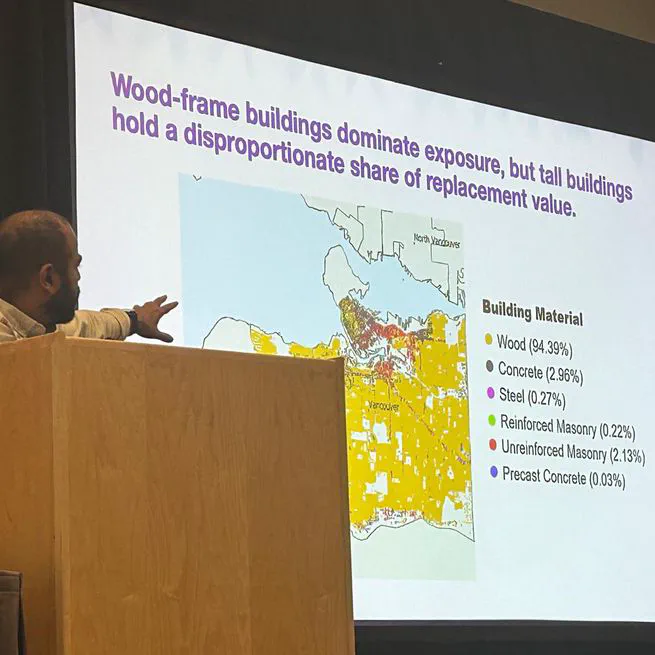
I presented our work on physics-based ground motion simulations and portfolio seismic risk at the 13th National Conference on Earthquake Engineering in Portland, Oregon. The paper compares physics-based simulations against empirical ground motion models for Metro Vancouver’s building portfolio under an M9 Cascadia subduction zone scenario, finding that empirical models significantly underestimate shaking and losses for tall buildings situated on deep sediment — a result with direct implications for how regional risk is quantified and communicated to insurers and city planners.
Jul 17, 2026
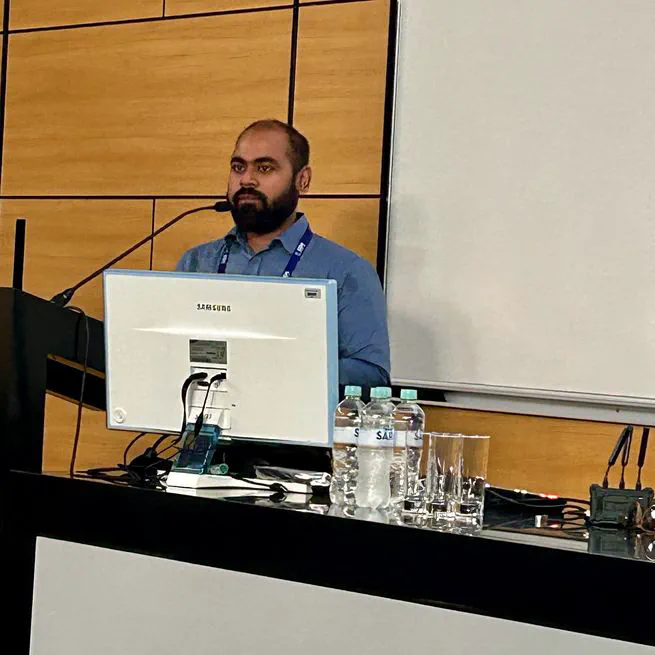
I presented our work on physics-based ground motion simulations versus empirical models for portfolio-level seismic risk assessment at the 2026 GEM Conference: From Faults to Future Scenarios in Zagreb, Croatia.
Jun 25, 2026

I was selected as one of three UCL Engineering ABSW Media Fellows for 2026, through the Association of British Science Writers Media Fellowship Scheme. The fellowship places practising scientists and engineers in media outlets for two to six weeks.
Jun 11, 2026
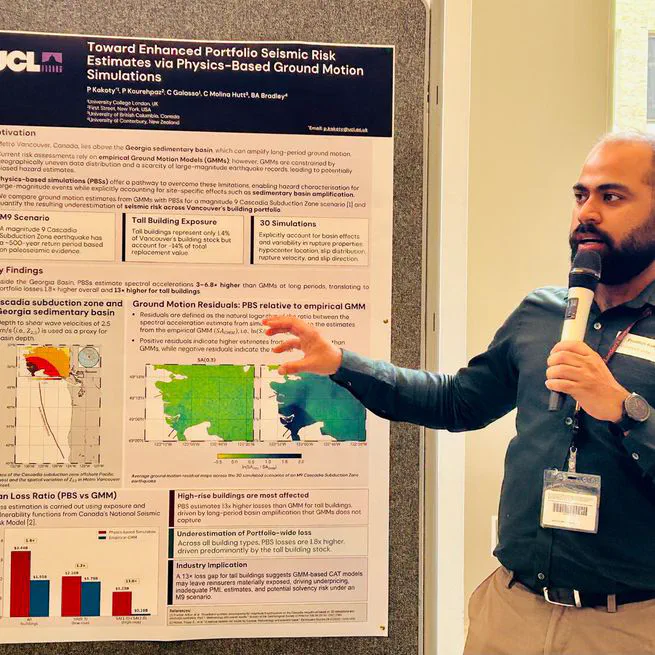
I presented a poster at the inaugural RIAGE (Re)Insurance-Academia Global Earthquake Workshop at UCL. This was a unique mix of catastrophe modelers, underwriters, and earthquake scientists sat together to share recent developments and future paths.
May 19, 2026
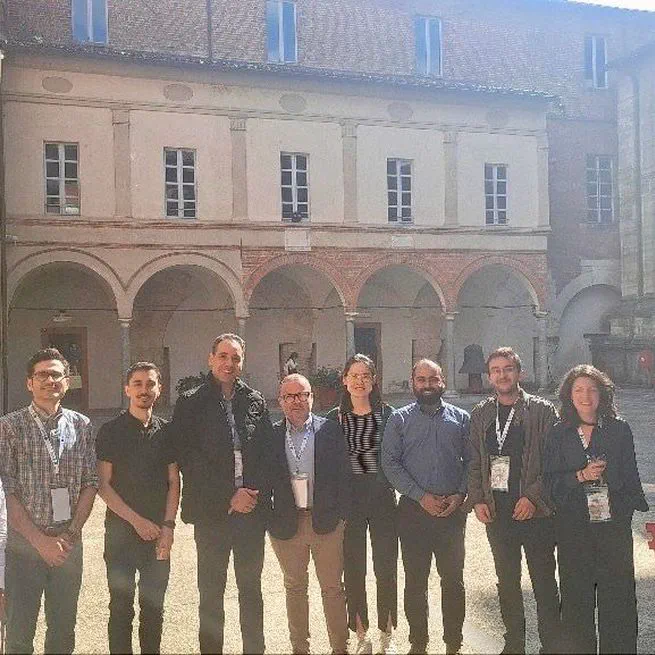
I attended the NEXT-GEN Spring School at IUSS Pavia, bringing together PhD students and researchers working across earthquakes, floods, droughts, and climate adaptation. The clearest takeaway: meaningful multi-hazard risk assessment and mitigation cannot be done within a single discipline.
Apr 28, 2026